

• Submit Poetry
  • About Us
  • Members
  • Support SCP
Thursday, September 25, 2025
Society of Classical Poets
  • Poems
    • Beauty
    • Culture
    • Satire
    • Art
    • Children’s Poetry
    • Covid-19
    • Ekphrastic
    • Epic
    • Epigrams and Proverbs
    • Found Poems
    • Human Rights in China
    • Humor
    • Music
    • Performing Arts
    • Riddles
    • Science
    • Song Lyrics
    • Terrorism
    • The Environment
    • The Raven
  • Poetry Forms
    • Acrostic
    • Alexandroid
    • Alliterative
    • Blank Verse
    • Chant Royal
    • Clerihew
    • Haiku
    • Limerick
    • Pantoum
    • Rhupunt
    • Rondeau Redoublé
    • Rondeau
    • Rondel
    • Rubaiyat
    • Sapphic Verse
    • Sestina
    • Shape Poems
    • Sonnet
    • Terza Rima
    • Triolet
    • Villanelle
  • Great Poets
    • Dante Alighieri
    • Edgar Allan Poe
    • Emily Dickinson
    • Geoffrey Chaucer
    • Henry Wadsworth Longfellow
    • Homer
    • John Keats
    • John Milton
    • Robert Frost
    • William Blake
    • William Shakespeare
    • William Wordsworth
  • Love Poems
  • Contests
  • SCP Academy
    • Educational
    • Teaching Classical Poetry—A Guide for Educators
    • Poetry Forms
    • The SCP Journal
    • Books
No Result
View All Result
Society of Classical Poets
  • Poems
    • Beauty
    • Culture
    • Satire
    • Art
    • Children’s Poetry
    • Covid-19
    • Ekphrastic
    • Epic
    • Epigrams and Proverbs
    • Found Poems
    • Human Rights in China
    • Humor
    • Music
    • Performing Arts
    • Riddles
    • Science
    • Song Lyrics
    • Terrorism
    • The Environment
    • The Raven
  • Poetry Forms
    • Acrostic
    • Alexandroid
    • Alliterative
    • Blank Verse
    • Chant Royal
    • Clerihew
    • Haiku
    • Limerick
    • Pantoum
    • Rhupunt
    • Rondeau Redoublé
    • Rondeau
    • Rondel
    • Rubaiyat
    • Sapphic Verse
    • Sestina
    • Shape Poems
    • Sonnet
    • Terza Rima
    • Triolet
    • Villanelle
  • Great Poets
    • Dante Alighieri
    • Edgar Allan Poe
    • Emily Dickinson
    • Geoffrey Chaucer
    • Henry Wadsworth Longfellow
    • Homer
    • John Keats
    • John Milton
    • Robert Frost
    • William Blake
    • William Shakespeare
    • William Wordsworth
  • Love Poems
  • Contests
  • SCP Academy
    • Educational
    • Teaching Classical Poetry—A Guide for Educators
    • Poetry Forms
    • The SCP Journal
    • Books
No Result
View All Result
Society of Classical Poets
No Result
View All Result
Home Poetry Art

Living Master: Jeremy Lipking

October 30, 2012
in Art
A A
3

By Michael Zakian

In a remarkably short period of time, Jeremy Lipking has emerged as one of the country’s premier realist artists. His talent, which rivals that of the late 19th century painterly realists such as John Singer Sargent, Joaquin Sorolla, and Anders Zorn, is outstanding for a painter of any age.

It is all the more remarkable since he is only 35 years old. Like these great painters of the past, Lipking is a virtuoso artist. His canvases convey the magical aura of convincing imagery emerging out of a field of paint.

RELATED

On the Art Institute of Chicago’s South Garden and Other Poetry by Adam Sedia

On the Art Institute of Chicago’s South Garden and Other Poetry by Adam Sedia

June 3, 2025
‘The Poppy’: A Poem by Akiane Kramarik

‘The Poppy’: A Poem by Akiane Kramarik

May 19, 2025

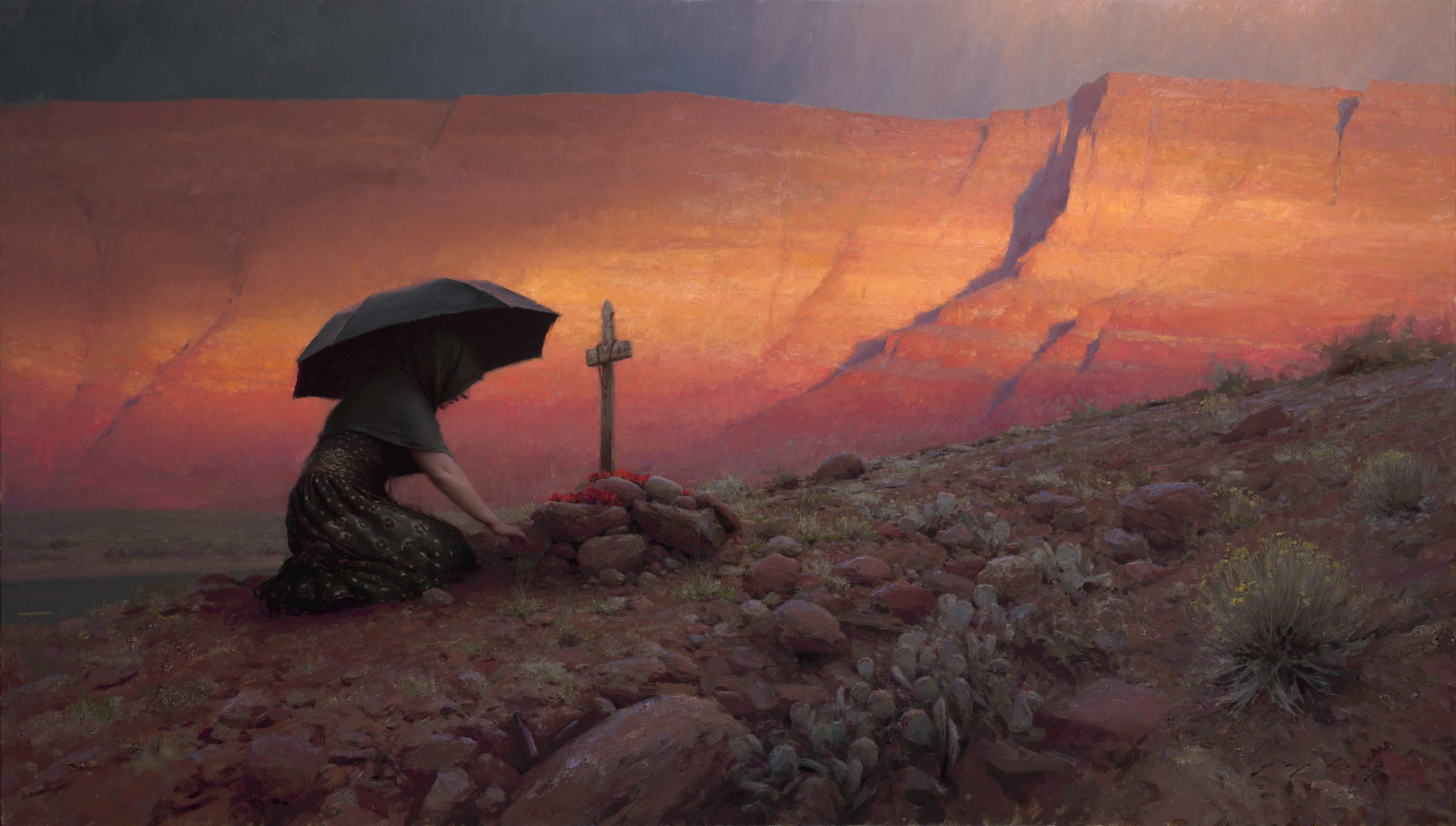
Realism has been misunderstood through most of the 20th century as an art of imitation. In truth, when practiced by a painter like Jeremy Lipking, realist painting is a powerful creative force.

Many viewers are drawn to his art, thinking that it looks just like a photograph. Actually Lipking’s vision is the opposite of what a camera does. A photograph tends to flatten an image, reducing all relationships of color and shade to a stiff mechanical pattern.

Lipking’s skill lies in his ability to probe in and around his subject. With a highly sensitive eye, he sees nuances of value and hue that the camera and most people can never see. More incredibly, he is able to translate his highly nuanced vision into a painted image.

Lipking’s true subject is his pictorial fluency. Seeing one of his paintings involves entering into the pictorial world he has created. Like all great realists, he has the ability to generate powerful fictions.

I have had the pleasure of watching Lipking paint on a number of occasions. The experience is both exhilarating and baffling. Lipking begins his paintings in a surprisingly loose, painterly manner—something I never would have expected.

He makes initial marks to find the scale and proportions of his subject. Then he applies a broad underpainting of color to capture the desired hue and value. At this stage, his paintings look almost abstract, consisting of a pattern of large colored shapes.

Lipking’s characteristic brushwork or gesture is what I like to call the “open touch.” What I mean by this is that Lipking applies paint in broad, loose facets, often leaving areas of bare canvas in between. In subsequent additions, the open areas are gradually filled in, creating a breathing lattice-like structure of paint.

In a curious way, the method is somewhat like Cezanne’s manner. But whereas Cezanne emphasized the discontinuity of his touches, Lipking works with close values, so that the result is a seamless veil of color.

The magic occurs in the finish. As he progresses, he gradually refines each area, adjusting relationships of color and adding deft touches to define select elements. He brings certain forms to a razor-sharp level of finish. Other passages are left vague and undefined.

In this interplay of sharp and loose, the painting literally opens up and breathes. This is what makes his art seem so lifelike. Instead of resting as static images, his canvases pulse with the subtle energy of a living thing…

Read the rest of the story at The Epoch Times.

[Featured Image: ‘Flor de Muertos,’ 40 x 70 inches, by Jeremy Lipking, private collection.]

ShareTweetShare
The Society of Classical Poets does not endorse any views expressed in individual poems or commentary.
Read Our Comments Policy Here
Next Post

Poetry by Leland James of Bellaire, Michigan

Poetry by Don Shook of Fort Worth, Texas

Poetry by Robert Covelli of Santa Fe, New Mexico

Comments 3

  1. neal Whitman says:
    13 years ago

    Evan, thank you for this insighful and evocative essay. What immediately struck me was parallel to poetry: probes in and around a subject. Just as the painter generates a powerful fiction, a true poet tells the Truth with Fiction — need not tell his own personal biography to tell The Truth about Life as it is lived. Lipking leaves bare areas and then fills in — poets ask the reader to finish the portrait.
    Amicus poeticae,

    Neal Whitman

    Reply
    • Evan Mantyk says:
      13 years ago

      Yes, I’ve always admired art more than the written word actually… but
      alas, my path led me to words, not images. The two are truly
      intertwined. Amicus poeticae, Evan

      Reply
  2. jkeymorgan says:
    13 years ago

    Thanks for the essay, I agree with Neal that it is insightful and evocative. It is also interesting to learn of the artist’s methods and note the similarities and differences to the methods my husband employs when he paints. It has always been fascinating to me, seeing layers of color applied to a canvas and watch a miracle take place.

    Reply

Leave a Reply Cancel reply

Your email address will not be published. Required fields are marked *

Discussions

  • Garima Obrah on The Society of Classical Poets 2025 Haiku Competition
  • Prashant Rawal on The Society of Classical Poets 2025 Haiku Competition
  • Michael Vanyukov on ‘Dear Blabby’s Advice for the Clueless’: A Poem by Roy E. Peterson
  • Michael Vanyukov on ‘Absalom, Absalom’: A Poem by Brian Yapko
  • Sreeja Mohandas on The Society of Classical Poets 2025 Haiku Competition
  • Amie on The Society of Classical Poets 2025 Haiku Competition
  • Katherine Davies on The Society of Classical Poets 2025 Haiku Competition
  • Leslie Hendrickson-Baral on The Society of Classical Poets 2025 Haiku Competition
  • Paulette Calasibetta on ‘Absalom, Absalom’: A Poem by Brian Yapko
  • Joseph S. Salemi on ‘Absalom, Absalom’: A Poem by Brian Yapko
  • Prae Pathanasethpong on The Society of Classical Poets 2025 Haiku Competition
  • Venessa Lee-Estevez on The Society of Classical Poets 2025 Haiku Competition
Facebook Twitter Youtube

Archive

Categories

Quick Links

  • Submit Poetry
  • About Us
  • Become a Member
  • Members List
  • Support the Society
  • Advertisement Placement
  • Comments Policy
  • Privacy Policy
  • Terms of Use

Welcome Back!

Sign In with Facebook
Sign In with Google
OR

Login to your account below

Forgotten Password? Sign Up

Create New Account!

Sign Up with Facebook
Sign Up with Google
OR

Fill the forms below to register

All fields are required. Log In

Retrieve your password

Please enter your username or email address to reset your password.

Log In
No Result
View All Result
  • Poems
    • Beauty
    • Culture
    • Satire
    • Art
    • Children’s Poetry
    • Covid-19
    • Ekphrastic
    • Epic
    • Epigrams and Proverbs
    • Found Poems
    • Human Rights in China
    • Humor
    • Music
    • Performing Arts
    • Riddles
    • Science
    • Song Lyrics
    • Terrorism
    • The Environment
    • The Raven
  • Poetry Forms
    • Acrostic
    • Alexandroid
    • Alliterative
    • Blank Verse
    • Chant Royal
    • Clerihew
    • Haiku
    • Limerick
    • Pantoum
    • Rhupunt
    • Rondeau Redoublé
    • Rondeau
    • Rondel
    • Rubaiyat
    • Sapphic Verse
    • Sestina
    • Shape Poems
    • Sonnet
    • Terza Rima
    • Triolet
    • Villanelle
  • Great Poets
    • Dante Alighieri
    • Edgar Allan Poe
    • Emily Dickinson
    • Geoffrey Chaucer
    • Henry Wadsworth Longfellow
    • Homer
    • John Keats
    • John Milton
    • Robert Frost
    • William Blake
    • William Shakespeare
    • William Wordsworth
  • Love Poems
  • Contests
  • SCP Academy
    • Educational
    • Teaching Classical Poetry—A Guide for Educators
    • Poetry Forms
    • The SCP Journal
    • Books

© 2025 SCP. WebDesign by CODEC Prime.

This website uses cookies. By continuing to use this website you are giving consent to cookies being used. Visit our Privacy and Cookie Policy.